Interview by Ofelija Dimkovska for Nulta.mk
Published 22.03.2026
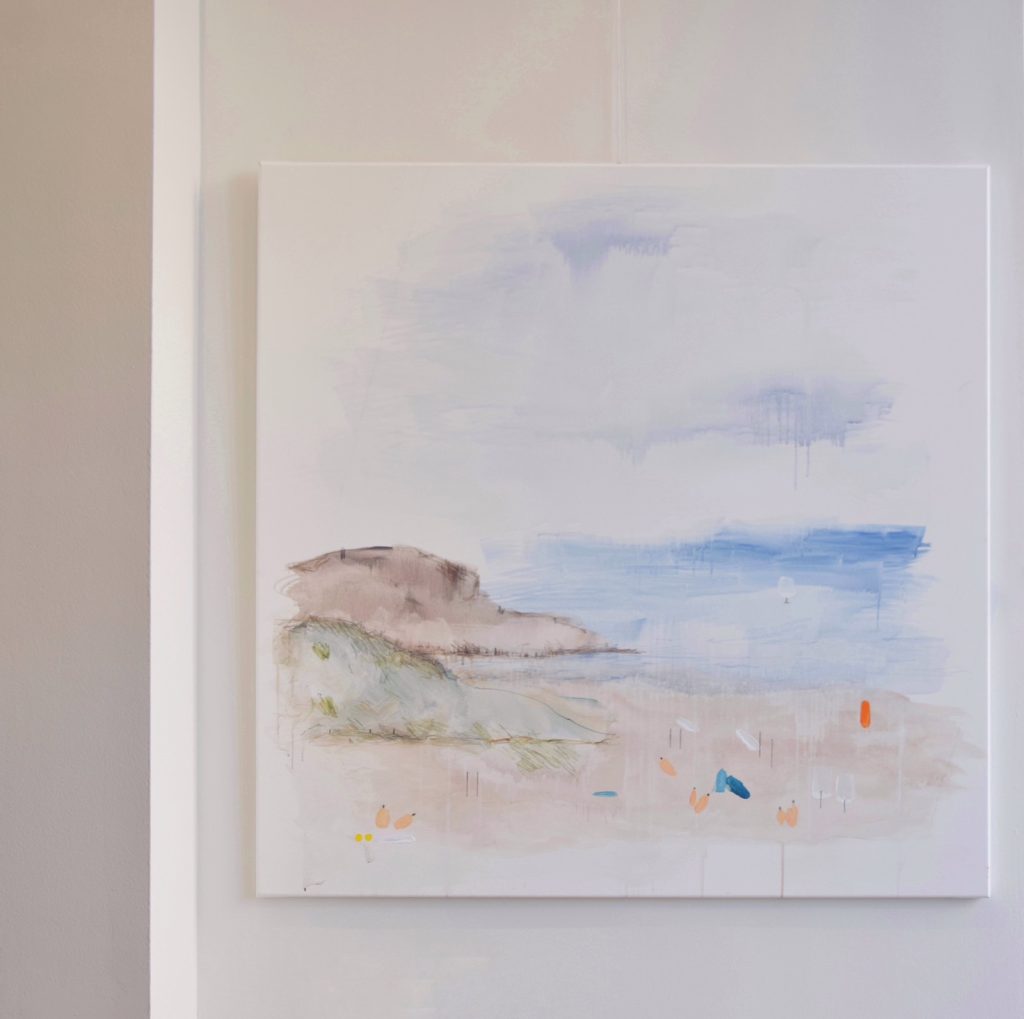
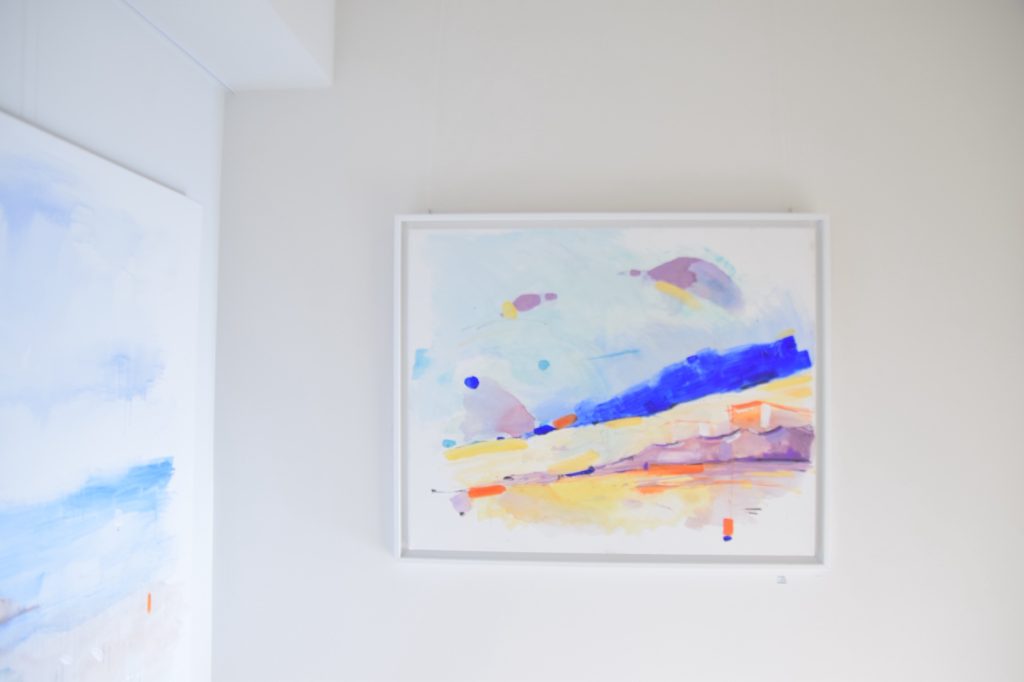
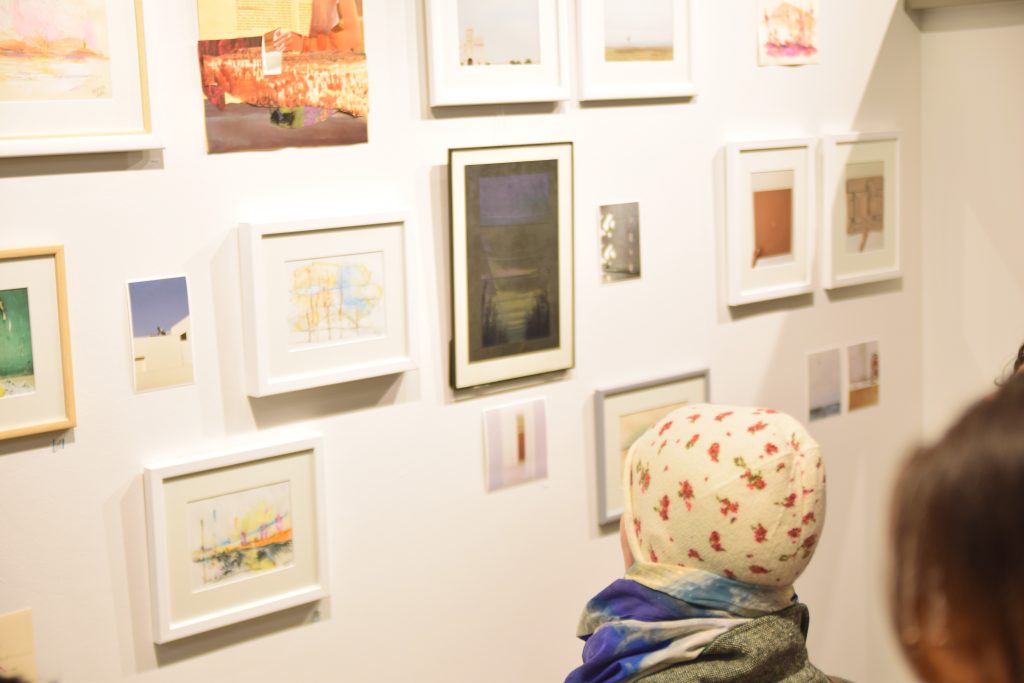
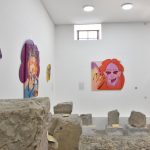
Sunday noon, an unseasonably warm day for this time of year. We sit down for a cup of coffee with architect and artist Natalija Zafiroska, just a few days after her exhibition Fragments of Becoming at Pioneri Gallery (Pioneri Art Platform). We want to hear her impressions of the exhibition evening, which drew a large audience completely captivated by her Fragments. Clearly happy that visitors connected deeply with her work, she speaks with passion about her artistic journey out of which her Fragments emerged, unfolding across the walls like a collection of several life stories. Skopje, Qatar, Florence, Portugal… the world seems vast, until an artist fragments it into some fifty pieces. But this was no ordinary exhibition of paintings nor is Natalija simply an artist who has chosen a theme for a show. Her paintings, photographs, and collages have been collected over the years, kept in folders and drawers, only to come together as a flowing narrative, one that evolves, expands, and carries within it its own ups and downs.
It matters to speak with artists in person, so as to witness their expression and their own experience of what they create. And she did speak…
ON THE ART, ON THE EXHIBITION…
“The art was for everyone, it wasn’t exclusive. Everyone could find themselves in it, as if discovering a part of themselves within the fragments. And the exhibition, it was for the people, the artist’s ego was absent. The Fragments came out of me, but anyone could find their own fragment, something that resonated with them. I was impressed by what people saw in the works. But if you’re not happy with your own work, you can’t expect anyone else to be happy either. I was afraid about the outcome while I was putting together the exhibit, but once it was done and I saw it as a whole, the fear was gone. I hadn’t anticipated the outcome. The exhibition says that art can be within everyone’s reach. That’s why I respect Pioneri, that’s exactly what they bring, emerging artists and thus, accessible art.
Is art inaccessible? On the contrary. But people will more often choose to print something out than buy an artwork, because they think it’s too expensive. Not necessarily. There are artists whose works are not out of reach.”
ON CREATING A WORK…
“It’s a reversed process for me. I observe something that others don’t notice. When I was working as a Branch Manager at an Italian architectural studio in Qatar, I would come across many empty spaces that were yet to be arranged, so you could observe how something begins to take shape, and how the interior fills up. There were countless scenes, construction elements placed within a space still under construction, yet making a perfect composition. Neither the person placing them intended that nor were they meant to be a gallery installation, and yet they make a perfect composition. Then they disappear, because they end up on the ceiling or on the walls. Almost no one sees art until it has found its function. But the temporary essence of things and spontaneity is something that excites me.
I document temporary objects before they disappear and are installed in a space. I wonder, for example, how can someone not see the beauty of a vacuum cleaner box. It’s not something made with the intention of being beautiful, it’s purely functional, meant to protect an ordinary appliance. That is until you begin to notice its contours. I find that beautiful. I see ordinary things differently, they make sense to me in an aesthetic and compositional way, and I curate them alongside other things, so that they take on a different form, an artistic one, let’s say. Because of its spontaneity, a raw form can simply be put in relation to other objects, which gives it artistic value.”
ON CONCRETE APPLICATION…
“This can be applied to any city, in any space. It’s not about me bringing in an installation and placing it as a finished artwork, or drawing over a wall, but about putting into context something that might initially seem ugly, so it gets a different perspective. Not just aesthetically, but also functionally. At a certain point, an object can be seen as something else, fragments are part of a moment. I believe that anything overly curated leans a bit toward kitsch. Most interiors are over-curated, there’s this tendency for your home to be arranged down to the tiniest detail, and you just sit in a space that someone else has designed for you. It shouldn’t be that way. Something that is pushed too far doesn’t feel natural. That’s my approach, not to force things. The object, the space must breathe…”
ON HOW WE EXPERIENCE ART AND SPACE…
“Sometimes I think we had a phobia of what was before, even a certain shame of where we came from. Vintage is a global trend, and I believe that on some level the new generations are no longer ashamed of the past. It seems to me that we wanted to erase everything that was Yugoslav, as if it had been imposed by the outside world. Slowly, we’re moving beyond that mindset – I see a living room in Hong Kong on Instagram and I want to have it too. There is so much beauty in what was before, just as there is beauty in preserving elements of a building that already exists. When we borrow something from elsewhere, whether in architecture or interior design, it’s as if we begin to lose our identity. We shouldn’t have a phobia of what we once were, but rather integrate it into the present…”
ON SENSING IMBALANCE …
“I’m hopeful. Even if we don’t have any beautiful spaces or buildings, we can still make the interiors more beautiful. Skopje-based café The Dude is a good example. There’s a balance of the new with the old. When there’s imbalance, you can sense it. The Dude has preserved the armchairs, kept the tiles, and the old kitchen from the apartment as it once was.
A way forward for Skopje is to make it more beautiful, and if we can’t ensure planned construction, then making the city more beautiful by making it greener is a good place to start. Cover the city in greenery, start from there, and then continue with art. Greenery itself will encourage people to spend more time outside, have a better social life, and create better, more humane public spaces.”
ON ART’S HIGH STANDING IN QATAR…
“World-class artists are invited to Qatar to educate and to build. I attended a lecture by Jeff Koons there. I even have a photo with him, I can’t believe it sometimes. I understand why he’s contested, but I also came to understand why he is who he is. A great artist.
Art in Qatar has a very high standing. World-class artists and architects visit Qatar, hold lectures, positioning themselves on the global art map. Art shouldn’t come last, it shouldn’t be a luxury. Because we all consume it.
They have an interesting approach. Building libraries, museums, galleries to elevate the country culturally. For example, there’s a district developed as a block where water used to spring, it’s an old urban fabric that had fallen into ruin and was then rebuilt, with good architects and real expertise. They know how to read the language of the old, and they have built something new, new houses where the houses of older families once stood. The buildings speak of the families. That’s how things are conceived, with a plan and a vision.
All arts can be avoided, I can choose not to watch a film, not to listen to music, but architecture cannot be avoided. You can’t lack aesthetic responsibility when it comes to building, and yet we have no rules. If art and architecture are important at a national level, and accessible to people, artists will find a way to express themselves.”
ON BUILDING UPON THE OLD…
“Elements of the old should be left in place, preserved. When something is already here, we need to see what can be retained. How it can be built upon. The old that has collapsed should not simply be replicated, but rather its language should be read, elements that were there should be interpreted and translated into the present.
My experience working in Qatar? They have a plan and a vision. They ask Italian artists to fit their architectural ornamentation into the Qatari clean style and simplicity. In landscaping, they seek Italian design. It may sound impossible, but they have managed to bring together Italian design with Qatari elements. Islamic architecture may appear clean on the outside, but in essence there is a desire for Italian elements, rich layers with multiple materials. That doesn’t mean ornamentation, but rather buildings designed with intention.”
ON FRAGMENTS INTO A WHOLE…
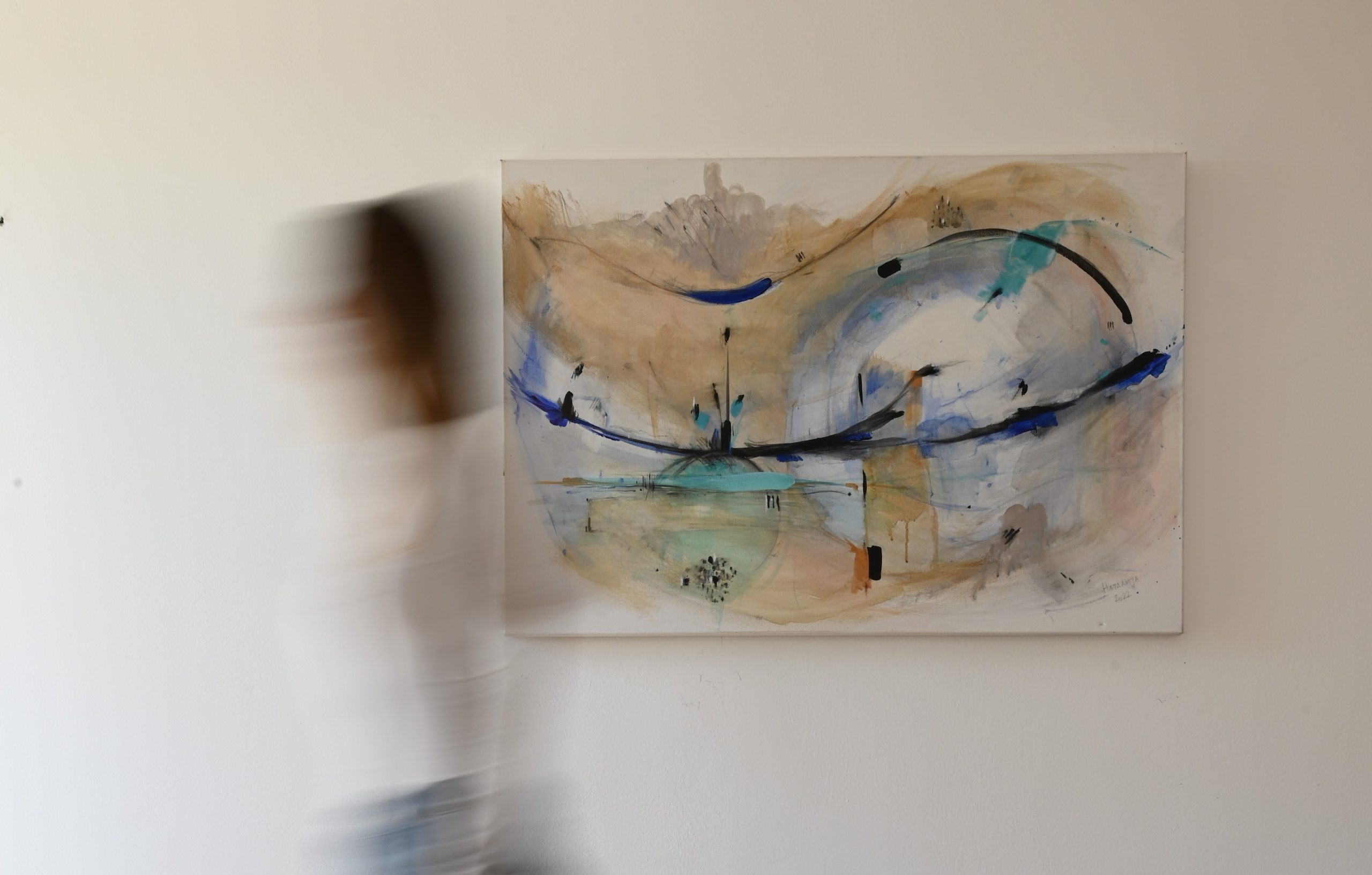
“When I work, I don’t have an end goal. I create, and at some point I realize that something is taking shape, I don’t start with the idea of making something specific. It simply happens, in the end there is a whole. What’s interesting is that the Fragments on display were created over the years and share similarities. They were selected by folders and drawers, and going through them I realized there is a theme, there is a whole, the colors are unified: both the collages from Portugal and the photographs from Italy speak the same language, but I wasn’t aware of it. I didn’t know what would come out of it in the end. That’s why the exhibition is called Fragments that eventually come together into a whole.”
ON BEING AT EASE WITH THE WORK…
“I think that Fragments don’t really convey emotions, I’m rather expressing what I analyze outside of myself. I don’t want to analyze what’s inside me, I already spend enough time alone with myself. A fragment is a moment when I pause to see what’s around me. Friends tell me that my drawings contain white space, blank areas. Maybe that means I’m searching for space, I need space, which is why I leave it blank rather than taking a drawing all the way to completion. There are full and empty spaces, but I don’t experience them that way. If an emotion or a period of life can be seen in the work, those are unintentional things that people read into. The exhibition is interactive, everyone found themselves in some fragment, an outcome I didn’t anticipate, like everything else. Art is simply a process. I don’t expect anything, but I’m surprised by the outcome.
I still find inspiration in something I criticize. Yesterday, I photographed a fragment in а demolished amusement park. There was a frame I captured that is, in reality, just a pile of ruins. I documented something that, for me, has a certain composition, yet no aesthetic value. I find it, I get inspired by the criticism of something as it is, I don’t expect to document something beautiful. That’s what we’re missing. Seeing things from a different angle. I’m inspired by things as they are. Sometimes they might seem ugly to others, sometimes I want to convey a message, sometimes it’s just a composition.
As for us… I hope the authenticity that is now hanging by a thread will be maintained. It’s also important to maintain it individually. I want everyone who sees the exhibition to see that the process itself is a work of art. That art isn’t always perfect or intentional, and that we can all be participants in that process. Art is part of our everyday lives, and creating it is always a long process, full of surprises. Architecture is lasting, but documenting compositions that will eventually disappear is no less important and beautiful for me.”